How to Make Your Home Look Like a Piece of History with Vintage Industrial Style
Whether it’s for new construction or a remodeling project in an existing home, one of the most popular design styles these days is vintage industrial style.
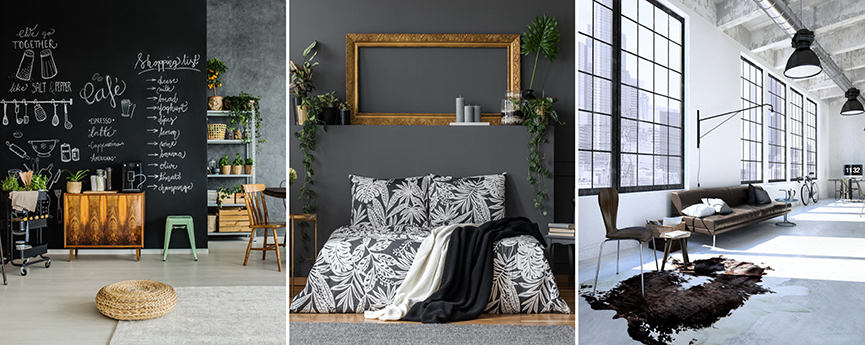
Vintage industrial style combines agedness, rawness, utilitarianism, and roughness, highlighting heavy metal fixtures, exposed concrete and brick, weathered wood, and reclaimed or antique pieces.
Here’s how to incorporate vintage industrial style into your design and achieve the perfect blend between modern and traditional.
Vintage Industrial Style is All in the Details
At its core, vintage industrial style is a neutral color palette of grays and rustic colors. Focusing on simplicity and minimalism, it takes weathered items (aged wood and metals), exposed materials (brick, beams, pipes, ducts, etc.), and unpolished, unfinished, rough, and/or raw design touches to create a look that harkens back to the past yet feels new and modern. It’s all about function and form seamlessly working together.
For flooring, think stained concrete floors with cracks, color variations, or imperfections, or reclaimed wood floors with knot holes, gaps, and rub marks. Either way, adding signs of time and use to the floors are a great place to start your vintage industrial style.
If you’re building or remodeling a kitchen or bath, focus on freestanding appliances — farmhouse-style sinks, built-in workspaces, a freestanding stove or island, etc. — while making cabinets look rustic and worn.
For other rooms in the house, you could add interior walls with weathered brick facades or a metal-paned glass wall instead of a solid wall. And don’t forget the lighting — exposed Edison bulbs, free-standing floor lamps, and/or old desk lamps.
But the things that will really tie the vintage industrial style together are refurbished furniture and antiques.
Choosing Refurbished Furniture and Antiques
Refurbished furniture and antiques are the backbone of any vintage home. Regardless of which era is your personal favorite, they are the key pieces that help cement the vintage feel in your design. Their unique sense of history transports viewers back in time in a way that newer creations simply can’t match.
That said, just because a piece is older doesn’t mean it’s worthy of being included in your design. If you’re going to include a piece of refurbished furniture or an antique, it needs to be in good condition. As a rule, if you don’t think the piece will stand up to daily wear and tear, keep looking for a sturdier option.
Remember though, don’t go too crazy with refurbished furniture and antiques. You don’t want the space to look like a museum. The best vintage designs are the ones inspired by tradition, yet still feel appropriately tied to present day.
To pull this off, round out the room with modern-day acquisitions that showcase the vintage-inspired details. For example, you may want to look for a piece with contemporary, clean lines done in a weathered finish. Alternatively, you could find an item that’s done in a trendy color or finish yet is also more ornate.
When mixing and matching modern and traditional design elements, consistency is key. Unless you’re a fan of truly eclectic styles, you want your vintage and your vintage-inspired items to fit well together. Make sure to carry similar detailing throughout the entire room, so the space feels both cohesive and intentional.
Make Vintage Industrial Style the Focal Point
When you do find refurbished furniture or antiques that fit the bill, make them the focal point of the room. A focal point is the first thing a person’s eye is drawn to when they enter the space. Putting a true antique into this role will help set the tone for the rest of your design.
For this reason, furniture becomes the perfect candidate. As always, allow the furniture in the room to take center stage because it helps make the function of the space crystal clear. Consider allowing a vintage dining table, accent chair, or bed frame to take center stage.
If that’s not your style, larger decorative items are also a solid choice. You may want to think about searching for a large mirror or piece of wall art to help carry the room. Well-kept rugs are a good option to keep in mind.
Use Vintage Patterns and Colors
Finally, color and pattern are great ways to really drive home that vintage aesthetic. Including these elements in smaller design items and decorations often has a large payoff for comparatively minimal effort.
Doing vintage industrial style properly does require a little legwork. You want to research your preferred time period to get an accurate sense of the styles that were popular back then. If you can, try to find an image from the era to use as design inspiration so you can see how these trends were actually used at the time.