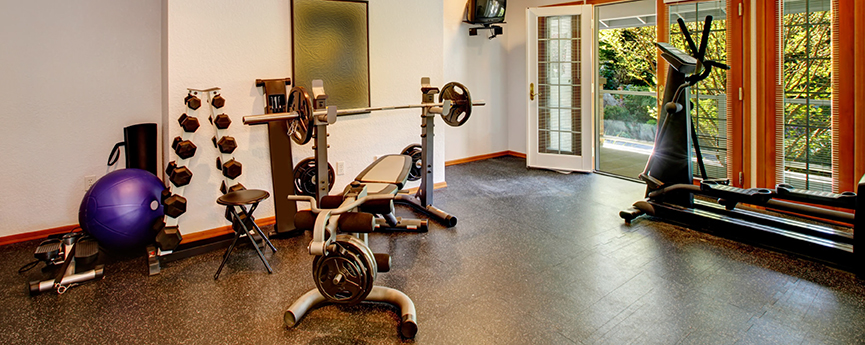
Turning Your Basement into a Home Gym
Did you resolve to get in shape this year? Many of us do, but even the best of intentions can get derailed when you have to go out and brave the weather in Chicago to get to the gym. Not to mention the annoyance of crowded gyms where you have to wait to use equipment and the loud, obnoxious people who distract from your “alone” time.
Building a home gym can eliminate all those problems. But where do you put it? Are you giving up your home office or a guest room? Building an addition? Why not make use of wasted space by turning your basement into a home gym?
Preparing to Turn Your Basement into a Home Gym
If you don’t properly prepare your basement, your home gym won’t be a place you’ll want to venture to any more than the local gym. Ensure your basement is properly prepped before the remodeling begins. This means filling in cracks and taking care of any moisture or leaks that may be present. It also means properly insulating exterior walls and ensuring that the room is temperature-controlled. Also, don’t forget to plan for air conditioning when you’re sweating away in the summer months. Tie into your existing HVAC system to take advantage of the heating/cooling system in the rest of your home.
Planning the Layout of Your Basement Gym
Consider your equipment and the type of exercise you want to do before you start building. Built-in wall hooks, racks, and shelves to hold weights or yoga gear can help save floor space. Do you need space to jump rope or do lunges? Is running on a treadmill your preferred method of cardio? Will you require a weight bench? Planning all of this ahead of time will help you lay out the space properly — which will encourage you to use it when it’s finished.
Don’t Forget the Flooring
In any basement remodeling project, you’ve got to consider appropriate flooring, and this is particularly true when turning your basement into a home gym. It helps insulate your feet from the cold and makes the space more comfortable. When it comes to home gyms, consider rubber flooring like you find in commercial gyms. It is waterproof, stands up well to abuse, and you can place heavy equipment on it. It also helps keep your feet warm, especially if you do yoga or other exercises that call for bare feet. In addition, rubber provides insulation when you do high-impact exercises like plyometrics.
Keep it Light
Just like a long drive or that annoying guy who won’t stop talking about his “gains,” a dingy basement home gym can be a huge deterrent to your workout plans. It may sound silly, but it will be easy to make excuses not to go downstairs if your space is dark and depressing. And since most basements are devoid of windows that provide natural light, you’ll need to be very generous with the overhead lighting. To really open up your space and make it brighter, consider installing a large mirror along one of the walls. This will also help you keep good form (and admire yourself) as you whip yourself into shape.
Don’t Do it Alone
Remodeling projects can be difficult, regardless of how big or small they are. Knowing where to focus your spending is key. Basement remodeling requires planning, prep work, waterproofing and more. If you want the best gym that’s right for you — and you don’t want to face problems down the road — working with a skilled contractor is highly recommended. If you must cut costs, do it after the gym has been built. Second-hand shops and thrift stores get flooded every year (usually around February) with weights, treadmills, and other exercise equipment from people who give up on their New Year’s resolutions. Let their lapse be your gain! Turn your basement into a home gym and tackle your fitness goals all year long.